Only 79,00€ away from free shipping
No products in the cart.
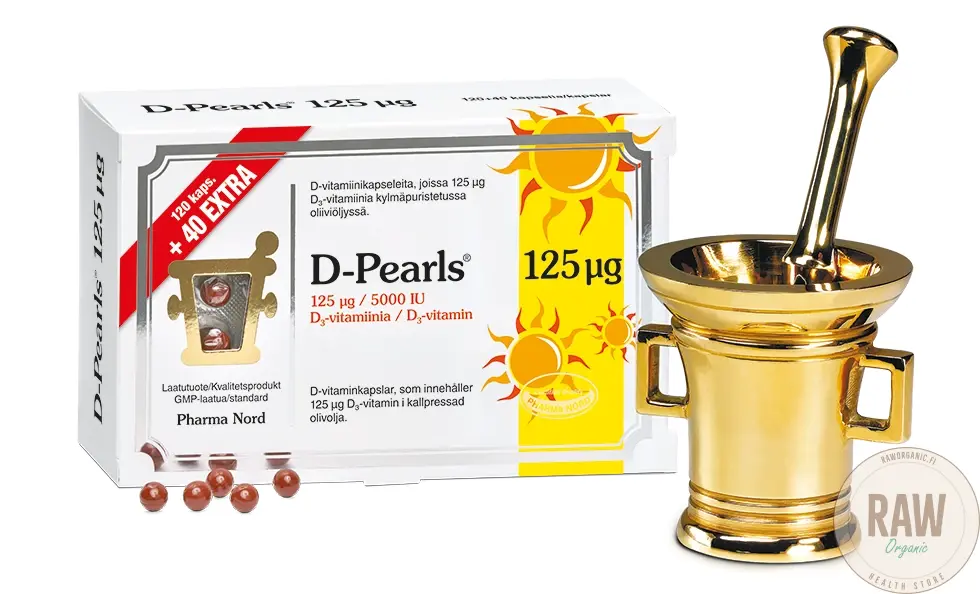
34,90 €
Shipped from store stock, 3–14 days
Delivery time 3–14 days
Out of stock in the online store – shipped from store stock (Mylly, Hansa). Estimated delivery 3–14 days. You can also collect it in store.
Vitamin D is a fat-soluble vitamin, and the best dietary source of it is oily fish. Vitamin D is also found in meat, dairy products, eggs and mushrooms. The body also synthesises vitamin D in the skin under the influence of the sun’s UV light.
The two most important forms of vitamin D are vitamin D2 (ergocalciferol) and vitamin D3 (cholecalciferol). D3 is also the form that the body synthesises under the influence of UV light. However, this synthesis is only possible when the skin is sufficiently exposed to sunlight or similar UV radiation. The skin synthesises vitamin D efficiently for the body’s needs, but only if the sun is high enough in the sky. In much of Europe, including Finland, this is only the case in summer. The body is therefore only able to produce enough vitamin D for its needs during the summer months.
The body obtains vitamin D2 only through the diet, from mushrooms and certain plant-based products. Both vitamin D2 and vitamin D3 must pass through the liver and kidneys to become biologically active. It was previously believed that both of these forms of vitamin D were equally effective in the body. However, depending somewhat on the method of measurement, vitamin D3 is 56–87 % more effective than vitamin D2 at raising blood vitamin D levels. Vitamin D3 is also stored in the body’s fat layer three times more effectively than vitamin D2.
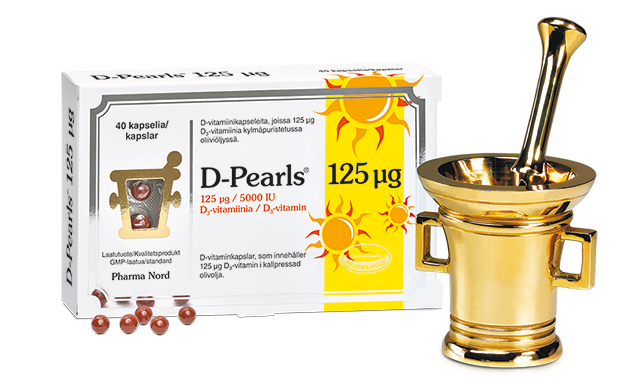
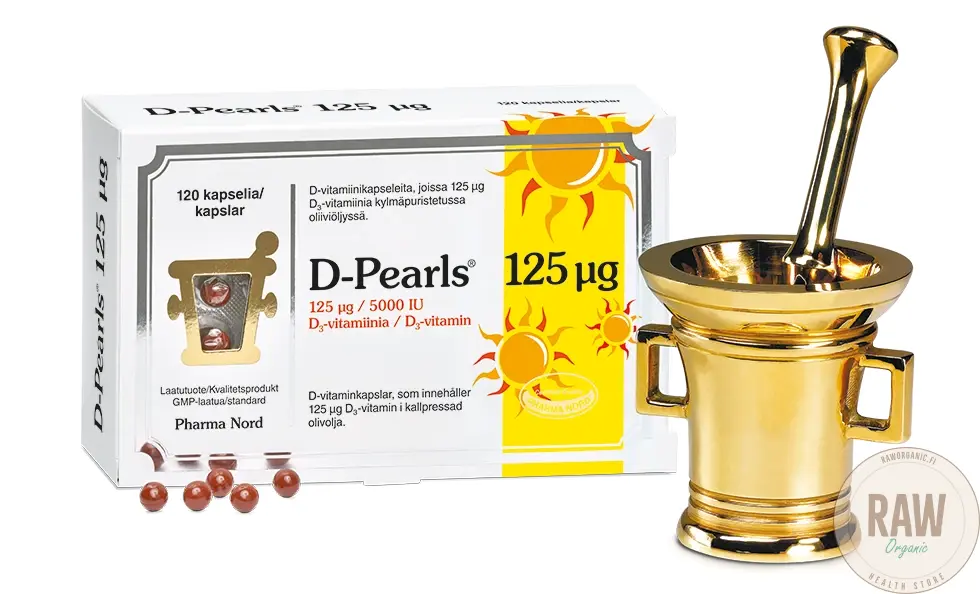
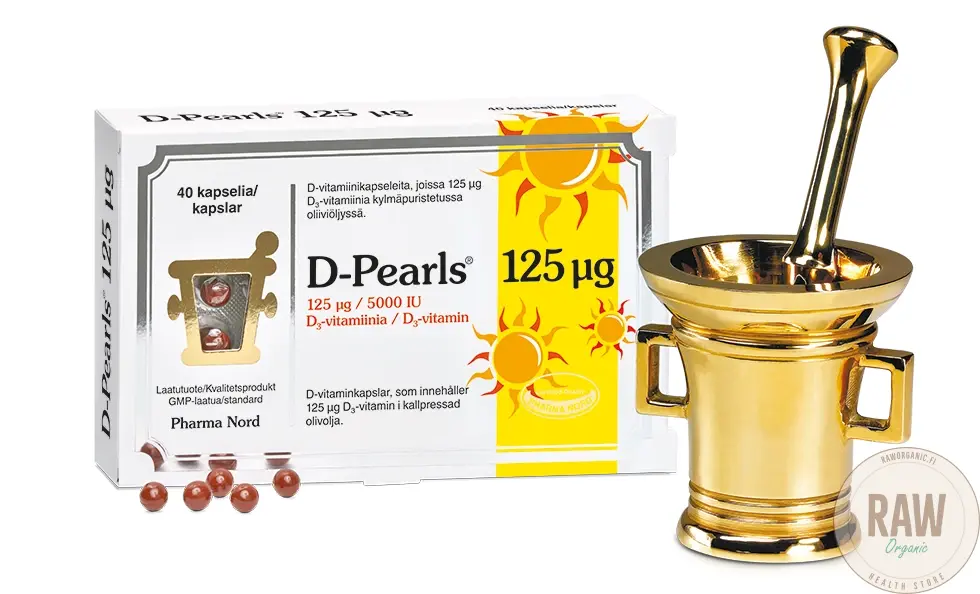
Vitamin D3 is a fat-soluble vitamin, which means it requires fat in order to be absorbed well. D-Pearls® capsules contain 125 micrograms of vitamin D3, dissolved in high-quality cold-pressed olive oil to improve absorption. D-Pearls® capsules are small, pearl-like gelatine capsules packed in a blister pack, and they are easy to swallow or chew.
D-Pearls® is a practical and reliable way to ensure the body gets enough vitamin D. It is especially important to take care of your vitamin D intake if you do not get enough vitamin D from the sun or from your diet. You may be at risk of insufficient vitamin D intake if: you are elderly, you spend a lot of time indoors, you live at northern latitudes where there is little sunlight, you eat little or insufficient amounts of oily fish or other good sources of vitamin D, you have dark skin (melanin reduces the skin’s ability to produce vitamin D from sunlight), you wear covering clothing that limits sun exposure, you are overweight.
Olive oil (cold-pressed), capsule shell (gelatine), humectant (glycerol), vitamin D3 (cholecalciferol), colour (iron oxide)
| per daily dose (1 kapseli) | %NRV | |
|---|---|---|
| Vitamin D | 125 µg | 2500 % |
Product information is based on details provided by the manufacturer, and the manufacturer may change the composition. Always check the ingredients, nutritional information and directions on the package before use.
| Weight | 0,04 kg |
|---|---|
| Ingredients | Olive oil (cold-pressed), capsule shell (gelatin), humectant (glycerol), vitamin D3 (cholecalciferol), color (iron oxide) Dietary supplements should not be used as a substitute for a varied diet or a healthy lifestyle. |
| Age group | |
| Gender | |
| Unit | pcs |
| Best before date and batch number | Marked on the package |
Available for collection: Skanssi, Mylly, Hansa
Available for collection in all stores
Available for collection in all stores
Available for collection in all stores

Reviews
There are no reviews yet